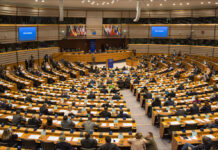
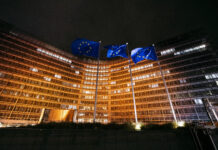
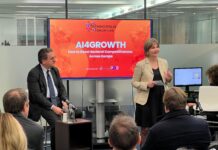
On Monday, 24 November, I-Com launched the event “ROMA–BRUXELLES 2.0: Italy Keeping Pace with Europe’s Challenges” in the Cinema Room of Europa Experience – David Sassoli in Rome, marking the opening appointment of the new Cantiere Europa+ initiative. The discussion brought together high-level institutional representatives and stakeholders to outline Italy’s priorities within the evolving European policy landscape.
Moderated by Giorgio Rutelli, Deputy Director at Adnkronos, who guided the discussion throughout the morning, the meeting opened with institutional greetings delivered by Fabrizio Spada, Head of Institutional Relations at the European Parliament Representation in Italy, and Elena Grech, Deputy Head of the European Commission Representation in Italy.
This was followed by the presentation of the Cantiere Europa+ initiative by Stefano Da Empoli, President of the Institute for Competitiveness (I-Com), who outlined the aims and structure of the new initiative, building on the work carried out during the 2024/2025 edition.
The debate then featured contributions from key government representatives:
Renato Loiero, Counsellor to the Italian Prime Minister;
Paolo Quercia, Director of the Studies and Analysis Division at the Ministry of Enterprises and Made in Italy;
Stefano Verrecchia, Head of the EU Affairs Department at the Presidency of the Council of Ministers;
Modesta Visca, Director of the International Relations Office at the Ministry of Health.
Their interventions offered a broad overview of ongoing national priorities and the main dossiers that will shape Italy’s positioning in Brussels in the months ahead.
The conversation continued with a Q&A session involving representatives of Italy’s productive system, including both partner companies and business associations. This provided space for an open exchange on expectations, challenges and emerging opportunities linked to Europe’s evolving policy framework.
Several key topics were addressed during the discussion, ranging from the next Multiannual Financial Framework — including the potential consolidation of agricultural and cohesion policies — to the newly proposed Competitiveness Fund, the future of the automotive sector, digital infrastructure, and the EU Climate Law.