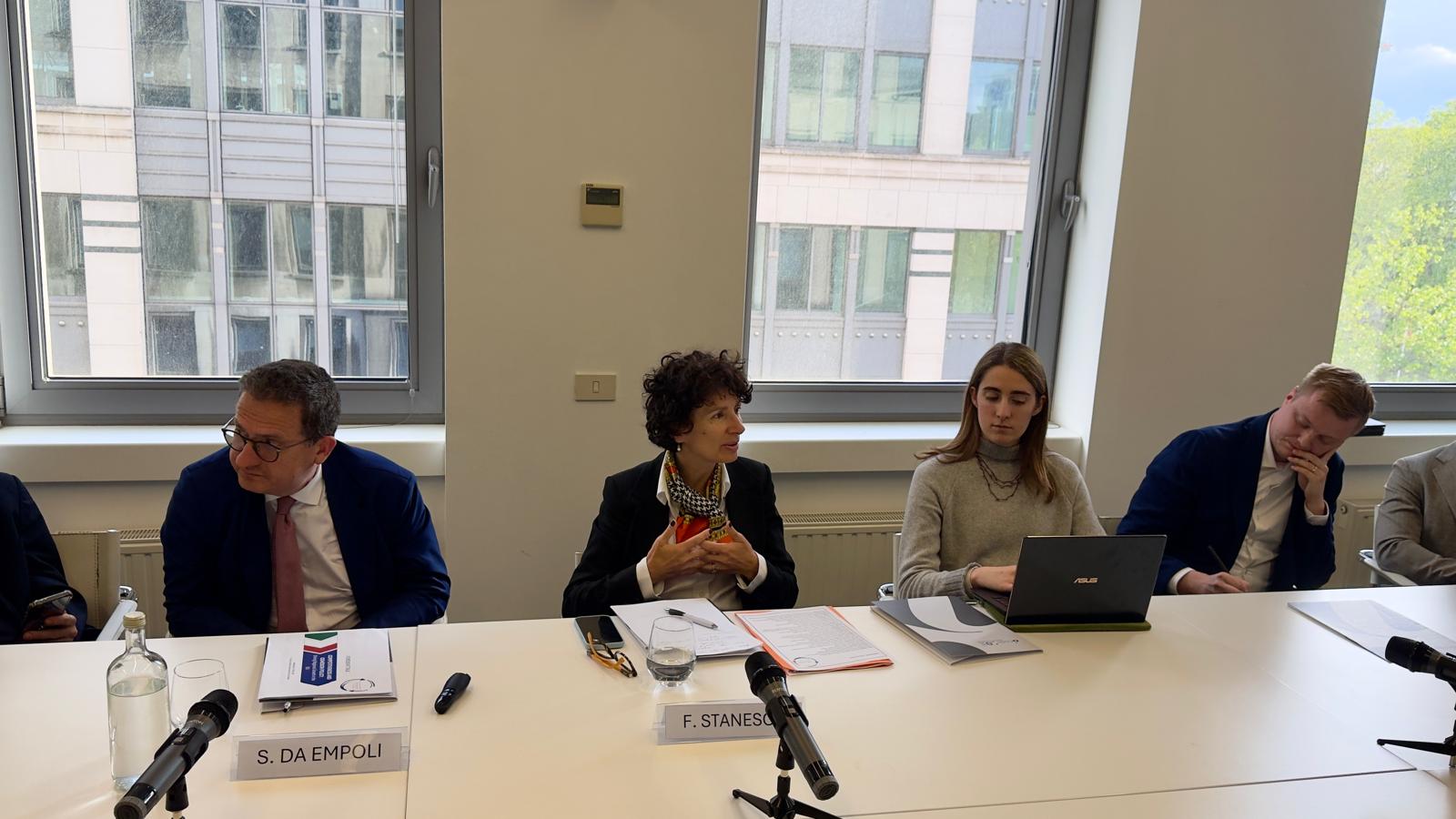
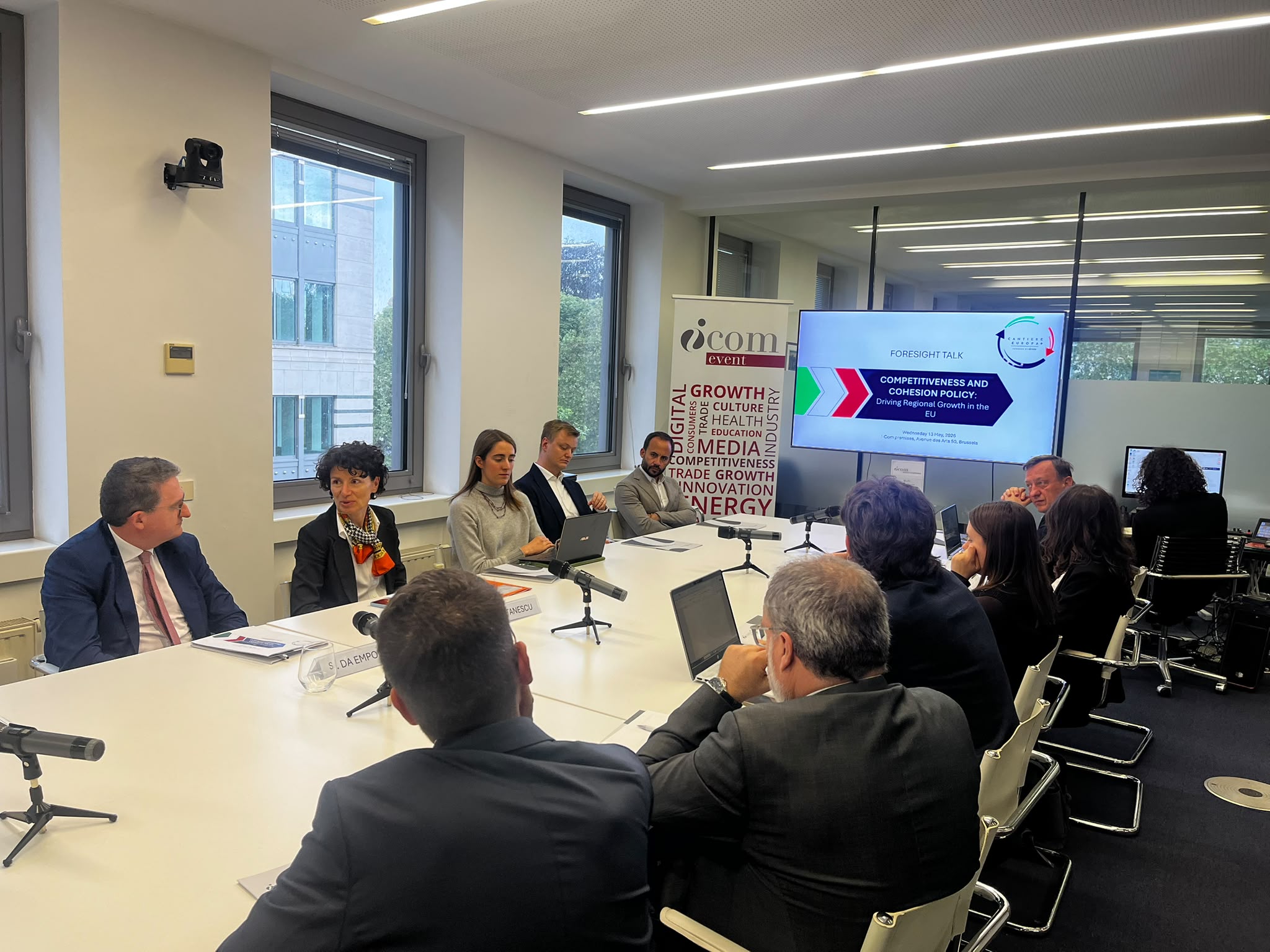
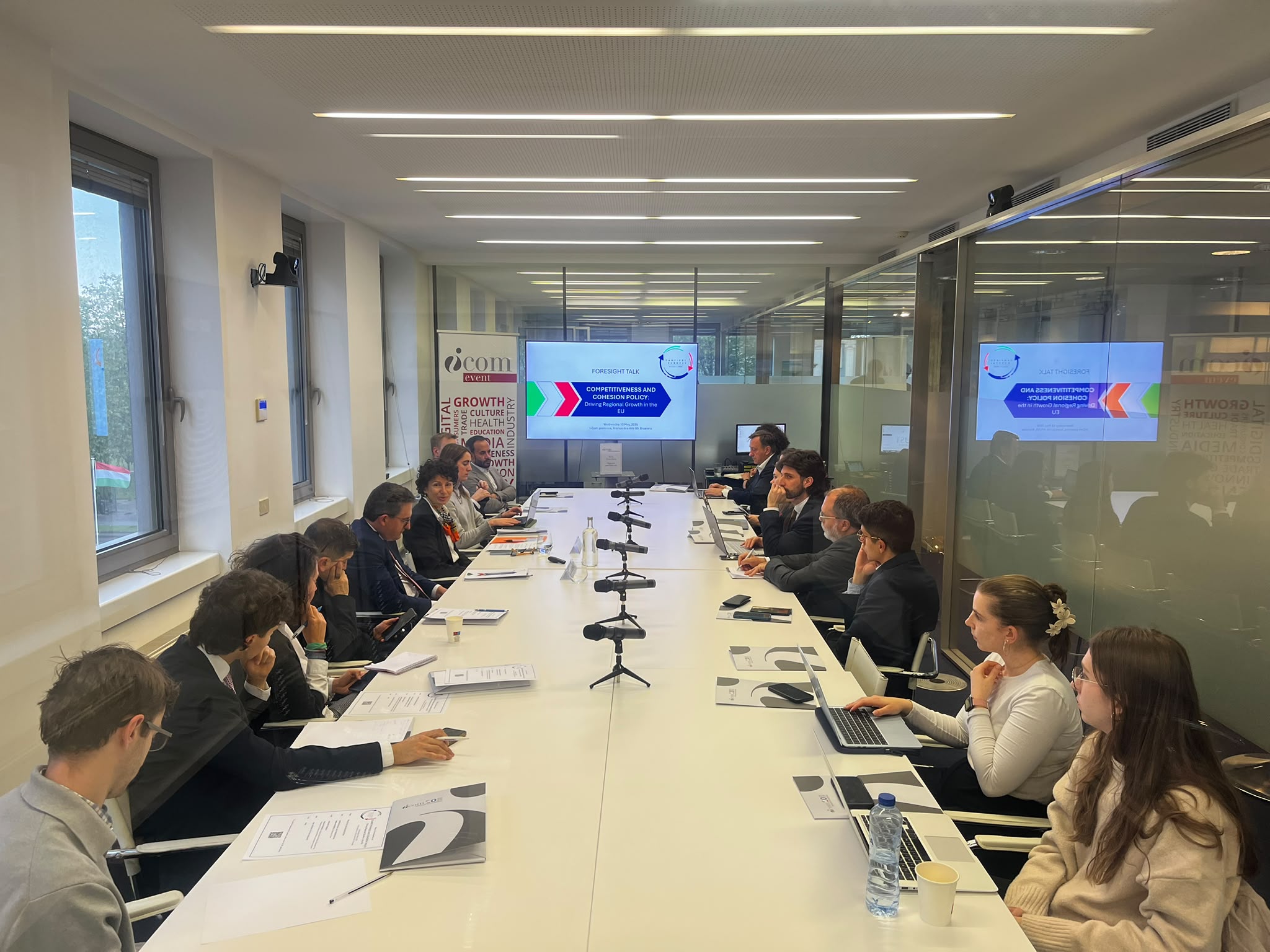
On Wednesday 13 May, I-Com hosted a discussion entitled “Competitiveness and Cohesion Policy: Driving Regional Growth in the EU” within the framework of the Cantiere Europa+ project. The event brought together institutional representatives, regional authorities, trade associations and stakeholders to discuss the future of EU cohesion policy and its role in supporting competitiveness, investment and territorial development across the European Union.
The discussion featured the participation of Felicia Stanescu, Deputy Head of Cabinet of Executive Vice-President Raffaele Fitto at the European Commission, who provided an overview of the ongoing institutional reflections concerning the future of cohesion policy and the broader architecture of EU funding instruments in the next programming cycle.
The debate focused in particular on the mid-term review of cohesion funds, the negotiations surrounding the next Multiannual Financial Framework (MFF), and the possible structure of the future Competitiveness Fund. Participants reflected on the need to preserve the traditional bottom-up and place-based approach that has historically characterised cohesion policy, while progressively integrating the more performance-oriented and reform-driven logic introduced through the Recovery and Resilience Facility (RRF).
Several interventions also highlighted the importance of ensuring greater coordination and complementarity among European financial instruments, avoiding overlaps while safeguarding the role of regional and local actors in defining investment priorities. Particular attention was devoted to the challenge of reconciling simplification, flexibility and strategic objectives with the principles of territorial cohesion and balanced regional growth.
The discussion subsequently opened to the many representatives from institutions, regional offices, associations and stakeholders attending the event, allowing for an insightful exchange on the future direction of EU cohesion and competitiveness policies in an increasingly complex economic and geopolitical context.