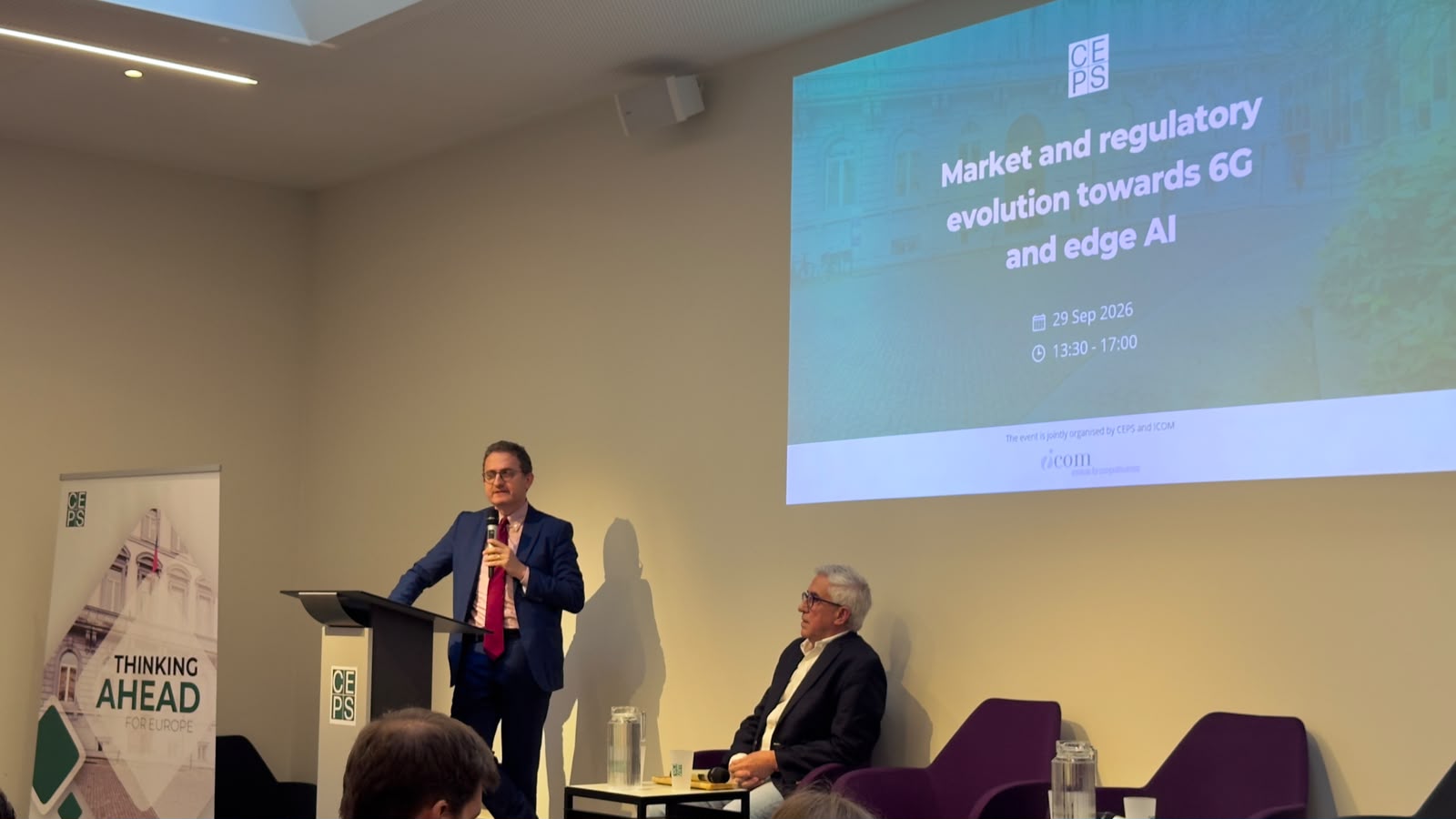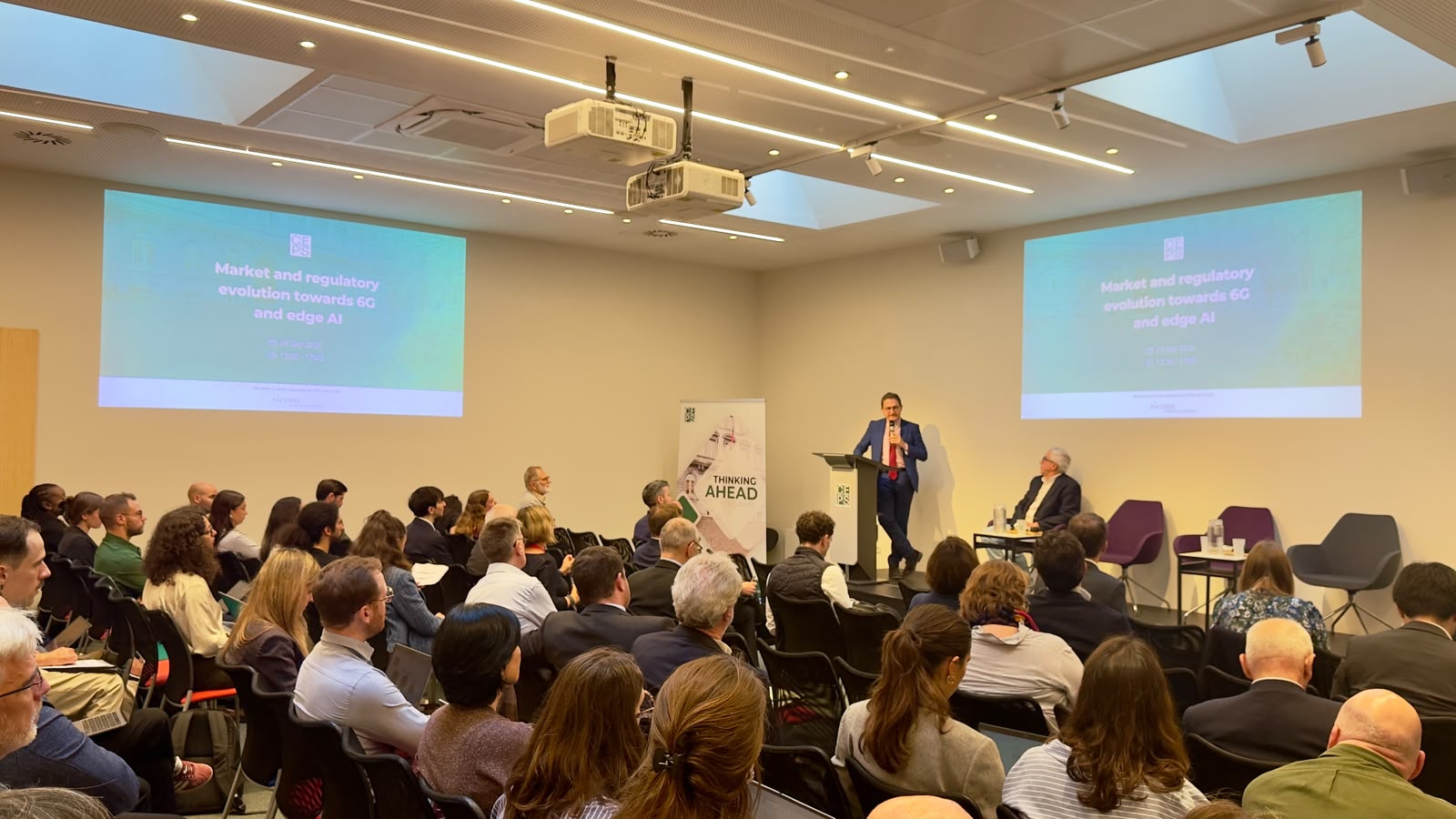
On 29 September 2026, the workshop “Market and regulatory evolution towards 6G and edge AI” was held at the CEPS headquarters in Brussels, bringing together representatives from EU institutions, industry, academia and the regulatory community to discuss the conditions needed for Europe to support the transition towards 6G and edge AI.
The event opened with introductory remarks by Lorenzo Pupillo, Senior Research Fellow at CEPS, and Stefano da Empoli, President of the Institute for Competitiveness, who framed the debate around Europe’s capacity to translate technological innovation into large-scale deployment and industrial competitiveness.
Session 1 – 6G and Edge AI: Impact, EU Targets and Industrial Policy
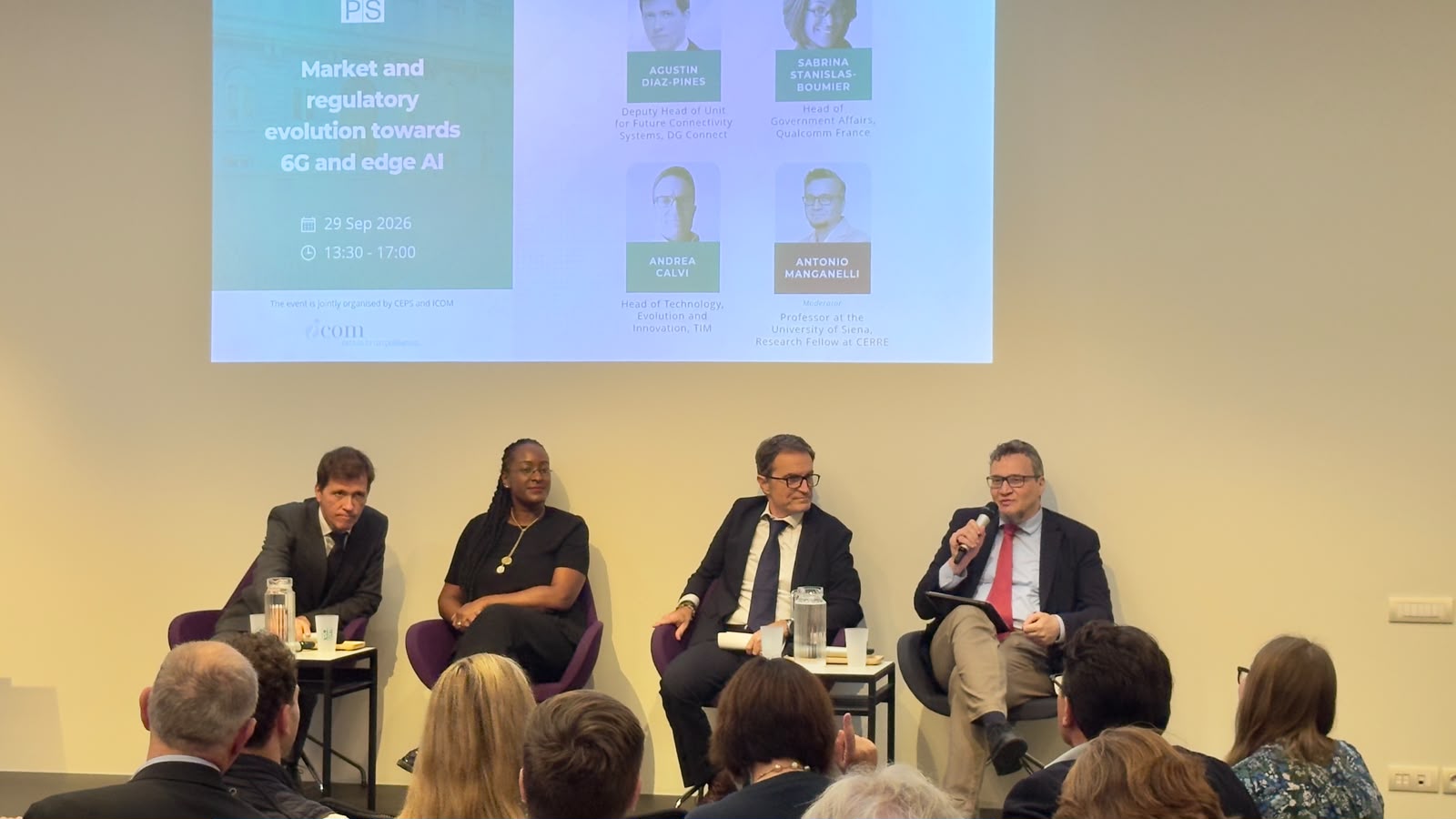
Moderated by Antonio Manganelli, University of Siena | CERRE, the first panel addressed the strategic and industrial relevance of 6G and edge AI for Europe. The discussion focused on the economic significance of next-generation connectivity, its contribution to Europe’s digital objectives, and the role of initiatives such as CAIDA, the Apply AI Strategy and broader cloud-edge policies in supporting a competitive European ecosystem.
The session brought together Agustin Diaz-Pines, Deputy Head of Unit for Future Connectivity Systems, DG Connect, Sabrina Stanislas-Boumier, Head of Government Affairs, Qualcomm France, and Andrea Calvi, Head of Technology, Evolution and Innovation, TIM. Their contributions examined Europe’s ability to move from research and technological development towards deployment and commercialisation at scale, as well as the conditions needed to strengthen investment and innovation across the connectivity ecosystem.
Session 2 – The Digital Networks Act: Investment Incentives, Spectrum and Regulatory Harmonization
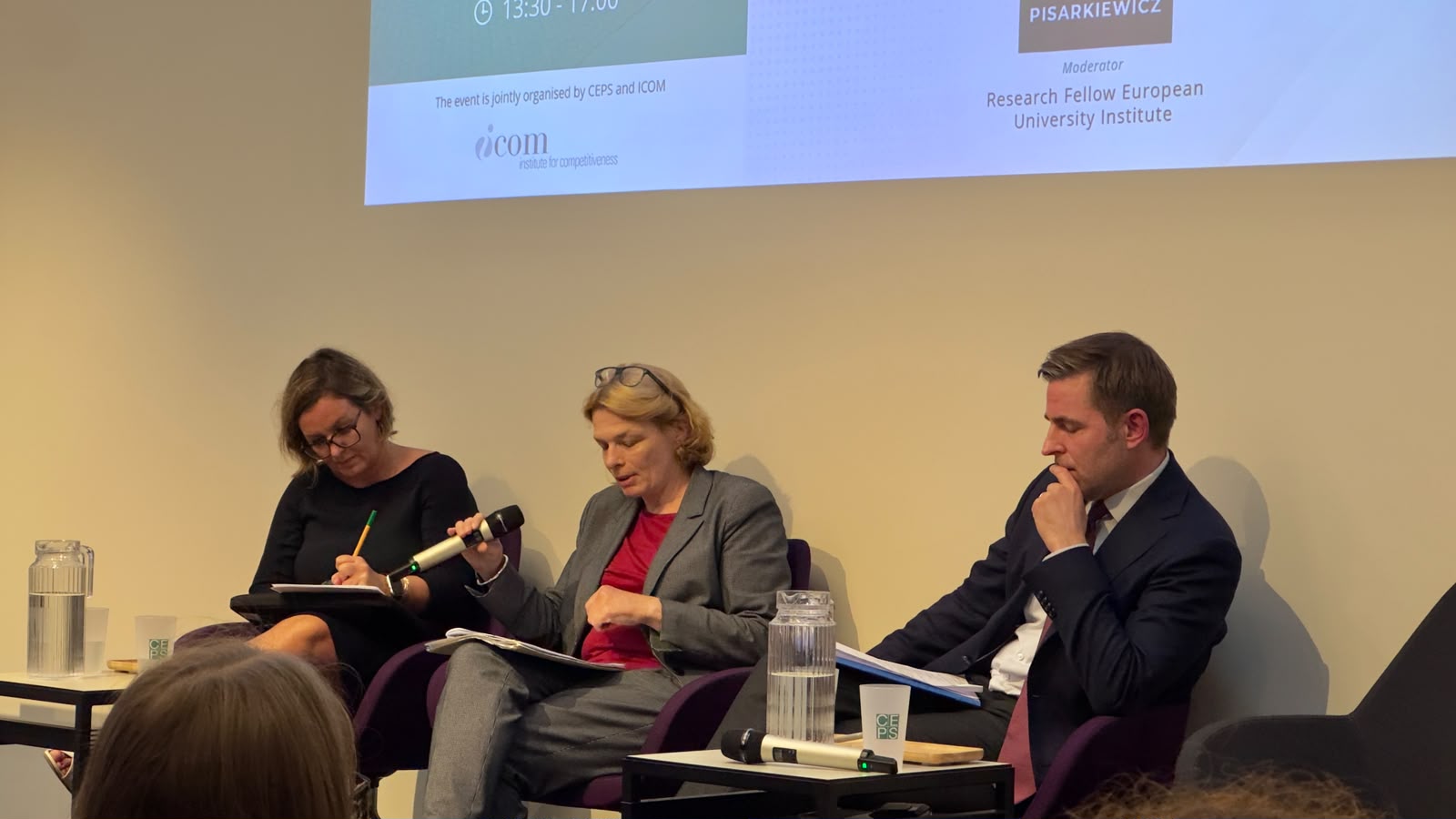
The second panel, moderated by Anna Pisarkiewicz, European University Institute, focused on whether the Digital Networks Act can materially improve the investment case for 6G and edge AI. Kamila Kloc, Director, Director Digital Decade and Connectivity— DG CNECT, European Commission, and Jakob Greiner, Vice-President EU Affairs, Deutsche Telekom, discussed the concrete mechanisms through which the DNA could influence capital allocation, the role of greater market integration in overcoming Europe’s persistent fragmentation, and the extent to which the proposal goes beyond reducing regulatory and compliance costs. The exchange also focused on spectrum policy, including licence duration and renewal, EU coordination of assignments, fees, coverage obligations and the lessons to be drawn from the 5G auction cycle. The panel closed by linking these issues to Europe’s broader competitiveness and Digital Decade objectives.
Session 3 – Competitive industrial dynamics for 6G and Edge AI
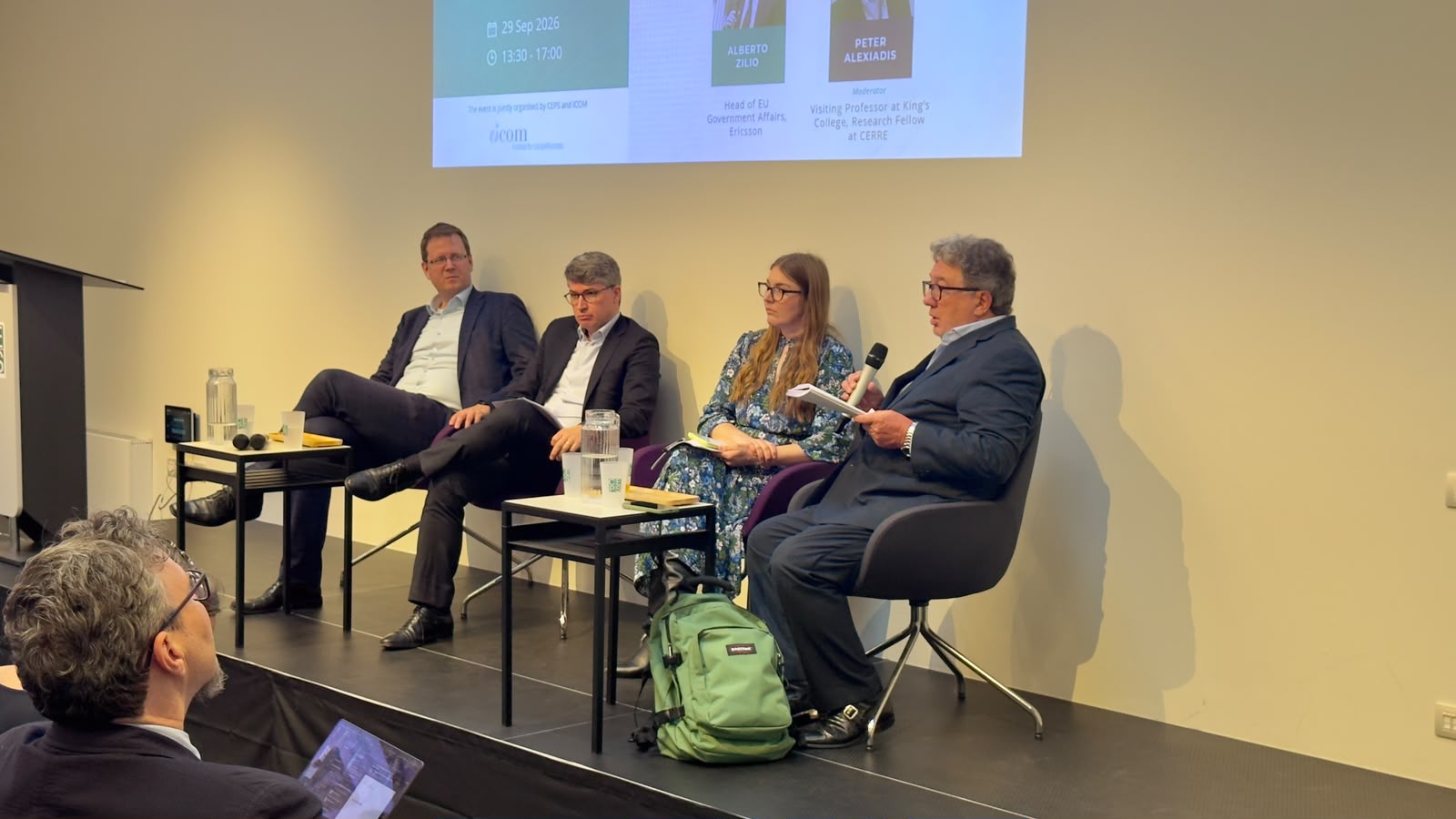
Moderated by Peter Alexiadis, King’s College London | CERRE, the final panel broadened the discussion beyond telecom-specific regulation to consider the competition and industrial-policy environment surrounding future network investment.
The panel featured Marc Zedler, Deputy Head of Unit Mergers, DG COMP, European Commission, Bobbie Mellor, Head of Network Policy and Market Structure, Vodafone Group, and Alberto Zilio, Head of EU Government Affairs, Ericsson. The discussion examined how merger control, co-investment and other forms of industrial cooperation may affect operators’ and vendors’ ability to achieve the scale, certainty and returns necessary for 6G deployment. It also addressed the wider importance of vendor ecosystems, trusted supply chains, cybersecurity, standardisation and intellectual-property strategies for Europe’s long-term technological competitiveness.
Conclusions
Across the three sessions, the workshop highlighted the close interdependence between technological development, telecom regulation, competition policy and industrial strategy. Building a competitive European 6G and edge AI ecosystem will require not only technological leadership, but also a regulatory environment capable of encouraging long-term investment, facilitating scale and reducing fragmentation.
The discussions underscored that Europe’s ability to compete globally in next-generation connectivity will ultimately depend on the coherence between its digital targets, industrial-policy instruments, connectivity regulation and broader competition framework, while maintaining secure and resilient technological and supply-chain ecosystems.
Please, find below the pictures of the event: